Lipidomic Insights into Seborrheic Dermatitis: Clinical Evaluation of Sebum Changes Using SpiderMass
Lucille Darras, Célia Ipinazar, Eléonore Gravier, Aurélie Mercadie, Aurélie Villaret, Razvan Marinescu, Martine Maître, Camille Géniès, Valérie Mengeaud, Isabelle Fournier, Gwendal Josse
Dermatol Ther (Heidelb)
https://doi.org/10.1007/s13555-026-01719-9
Abstract
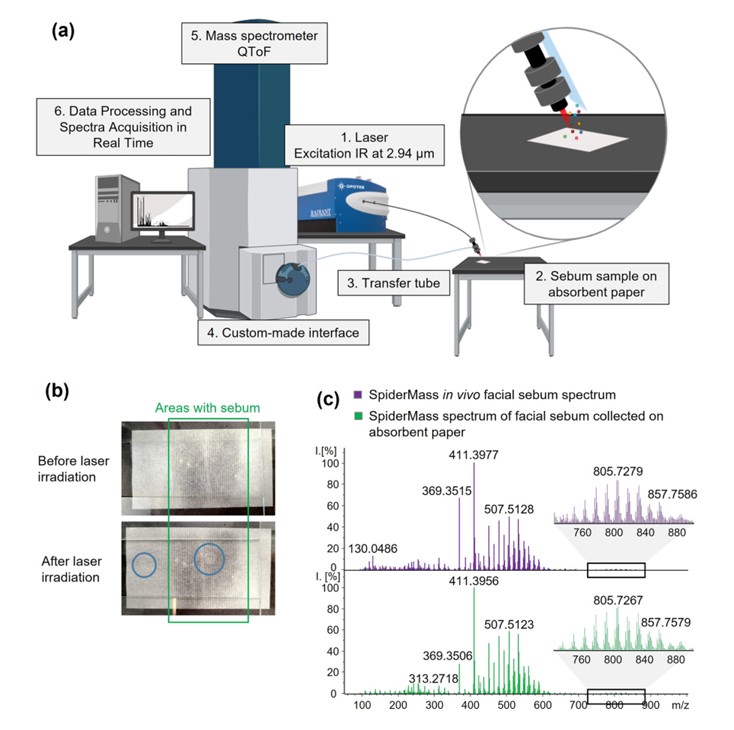
Introduction: Seborrheic dermatitis (SD) is a skin disorder in which chronic inflammation of the scalp is linked to excessive sebum production and overgrowth of Malassezia fungi. These fungi break down sebum lipids, releasing pro-inflammatory unsaturated fatty acids. Lipidomic and metabolomic sebum analysis is thus essential to better understand SD. SpiderMass, an innovative ambient ionization mass spectrometry (AIMS) technology, allows for fast, direct, and non-invasive biochemical profiling of sebum. This study aimed to assess the potential of SpiderMass for evaluating the skin metabolome and lipidome in scalp SD and study the impact of an anti-SD shampoo (Kelual DS®) on the relative levels of SD-associated scalp metabolites and lipids.
Methods: Scalp sebum samples were obtained from 42 subjects with scalp SD enrolled in a randomized controlled clinical trial to assess the efficacy of the anti-SD shampoo. All participants used the anti-SD shampoo three times weekly for 2 weeks (intensive phase), followed by an 8-week maintenance phase in which subjects either continued to apply the anti-SD shampoo once weekly (KDS group) or switched to a neutral shampoo (control group). Sebum was collected during each study visit and analysed with SpiderMass. Additional biochemical analyses were also performed.
Results: After 2 weeks, SpiderMass analysis revealed a significant increase in the levels of glycerolipids and saturated fatty acids, alongside a reduction in the levels of inflammation markers such as histamine, oxylipins, and arachidonic acid. The change in lipid profile correlated with reduced Malassezia levels. During the maintenance phase, the more balanced lipid profile and lower inflammation marker levels were maintained only in the KDS group. SpiderMass findings were consistent with conventional liquid chromatography coupled to mass spectrometry (LC-MS) data.
Conclusion: The anti-SD shampoo helped restore and maintain scalp lipid balance and reduce inflammation marker levels and may therefore contribute to improving skin barrier function in scalp SD. SpiderMass enabled real-time monitoring of changes in glycerolipids and inflammation markers, providing results consistent with those obtained using conventional LC-MS approaches. This reliable, powerful, non-invasive tool could be used as a rapid method for biochemical skin analysis in clinical studies, offering new insights into SD mechanisms and treatment responses.
Gov identifier: NCT06578962 (retrospectively registered on 28 August 2024).