Beyond immune privilege: the brain as a dynamic immunological interface
Firas Kobeissy, Michel Salzet
Cell Death Dis
https://doi.org/10.1038/s41419-026-08561-z
Abstract
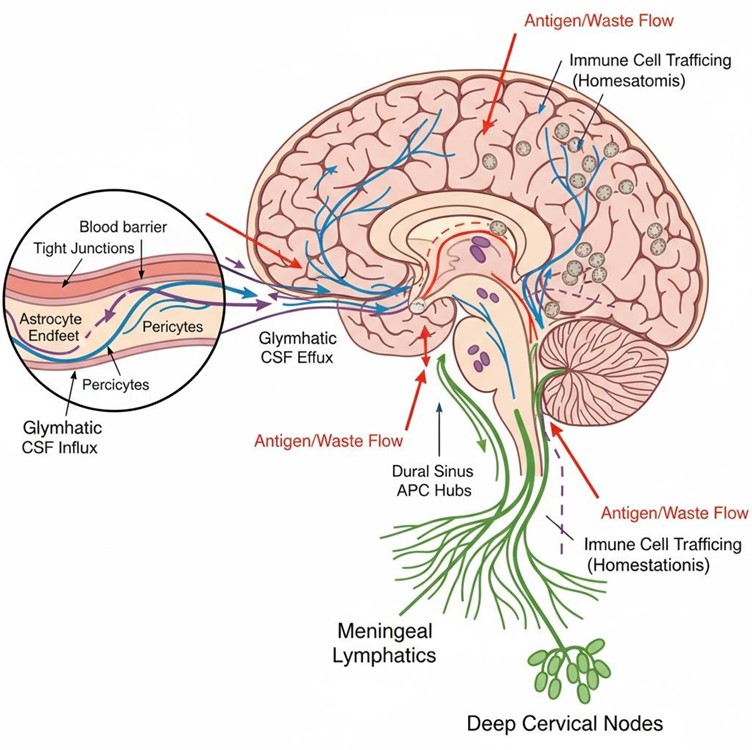
Classically viewed as an “immune‑privileged” site, the central nervous system (CNS) was believed to be shielded from peripheral immune surveillance by the blood-brain barrier (BBB) and the absence of conventional lymphatic vessels. Recent discoveries, particularly the identification of functional meningeal lymphatic vessels and the glymphatic system, recast the CNS as a dynamic immunological interface. Here, we synthesize advances that explain how immune cells access brain border tissues and parenchyma, how resident glia (microglia and astrocytes) shape inflammatory tone and repair, and how gut microbiota, together with regional heterogeneity, refine CNS immunity. We contextualize these mechanisms in disease, including multiple sclerosis, infection, and neurodegeneration, and we outline therapeutic implications that emerge from a revised view of “immune privilege.” This contemporary perspective underscores the importance of targeted CNS immune modulation, aiming to minimize harmful responses while promoting protective mechanisms in the contexts of neuroinflammation, neurodegeneration, and neuro-oncology.