Cocaine use in Europe: the need for cross-sectoral collaboration between security, justice, health, and social systems
Marie Lhosmot-Marquet, Clotilde Champeyrache, Hélène Donnadieu, Emilie Jouanjus, Yasser Khazaal, Perrine Roux, Bénédicte Varignon, Laurent Fleury, Etienne Coyaud
The Lancet Public Health
https://doi.org/10.1016/S2468-2667(25)00283-X
Abstract
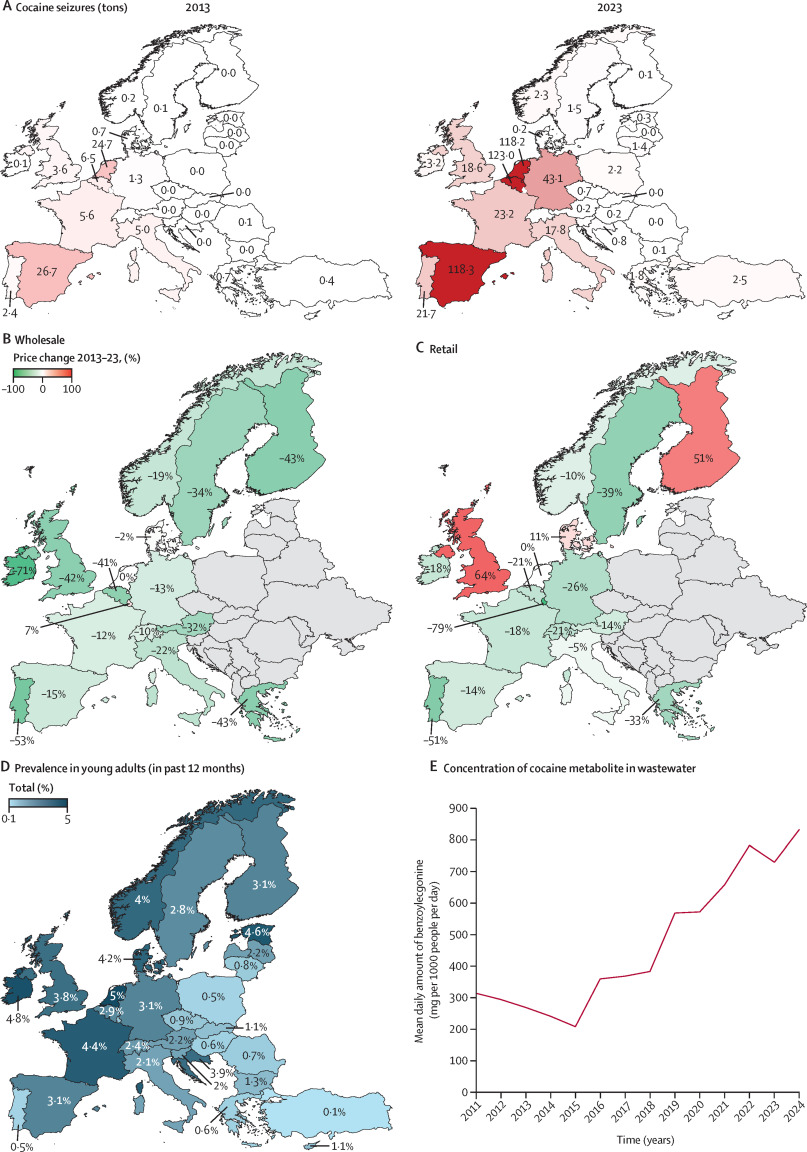
Cocaine use has increased in Europe over the past decade, raising concerns regarding its associated harms. This increase is driven by the contemporary transformation of the international cocaine supply chain, which has led to increased availability, purity, and use rates. Cocaine use affects both health and society, challenging European countries’ health and social care capabilities and models. Addressing these challenges requires multisectoral collaboration to understand the issues better and develop appropriate public health strategies. Integrating security, social, and health policies is thus necessary, and their coordinated actions should lead to improving health and living conditions of people who use cocaine. Given the recent evolutions of the market, there is an awareness of the need to improve security measures to combat drug trafficking in Europe, but health and social aspects have not been sufficiently considered. In this Viewpoint, we review key facts about cocaine use within the European context and propose pragmatic and prioritised measures, reconciling health, social, justice, and security aspects.