Innate immune cells in chimeric antigen receptor therapy
Marius Jassaud, Lydia Ziane-Chaouche, Marie Duhamel, Michel Salzet
Molecular Therapy
https://doi.org/10.1016/j.ymthe.2025.10.003
Abstract
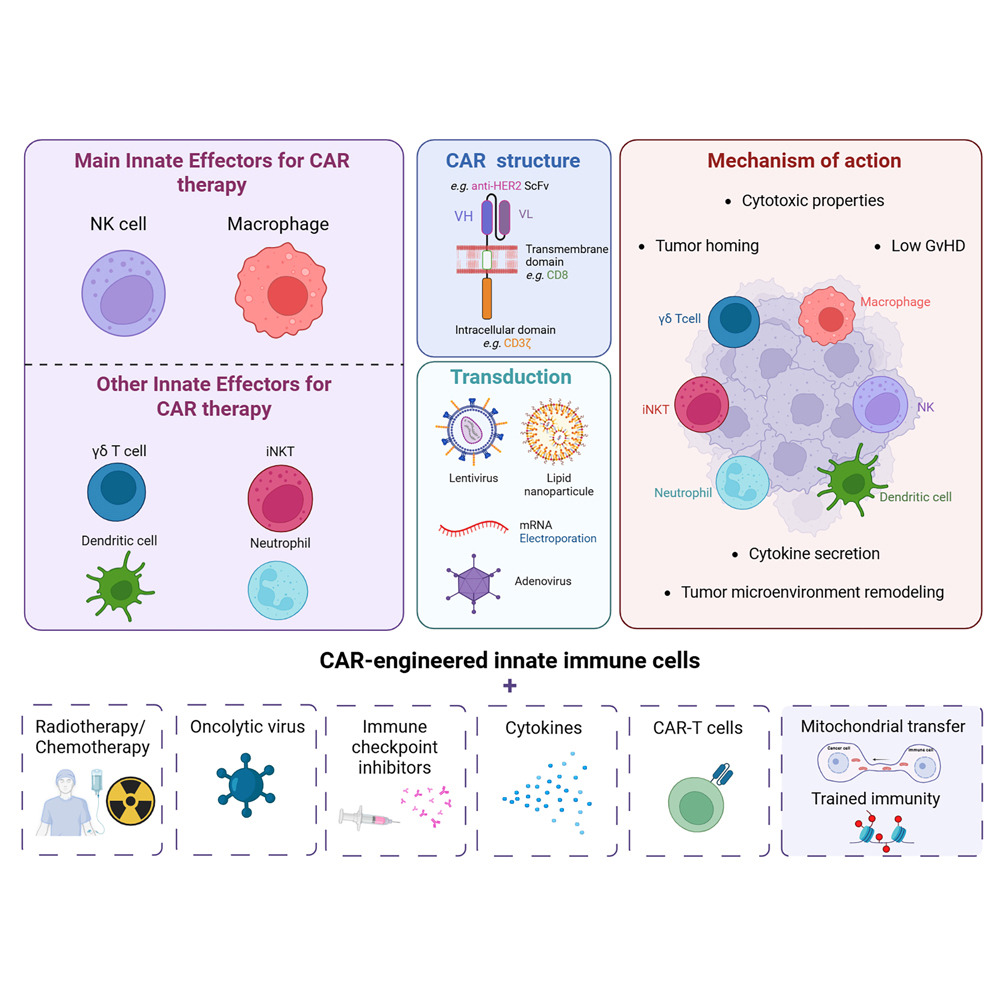
Chimeric antigen receptor (CAR) therapies have revolutionized cancer treatment, particularly with the success of CAR-T cells in hematologic malignancies. However, their application to solid tumors remains limited by major challenges, including cytokine release syndrome, neurotoxicity, poor tumor infiltration, antigen heterogeneity, and high manufacturing costs. These limitations have prompted growing interest in alternative immune effector cells. Innate immune cells, such as natural killer (NK) cells, macrophages, invariant NK T cells, γδ T cells, dendritic cells, and neutrophils, offer distinct advantages. They are associated with a lower risk of graft-versus-host disease, possess intrinsic tumor-homing and cytotoxic properties, and are suitable for off-the-shelf therapeutic platforms. This review explores the biological rationale and clinical potential of CAR-engineered innate immune cells, highlighting key findings from preclinical and clinical studies. Finally, we discuss combinatorial strategies and future directions that could shape the next generation of CAR-based therapies for solid tumors.