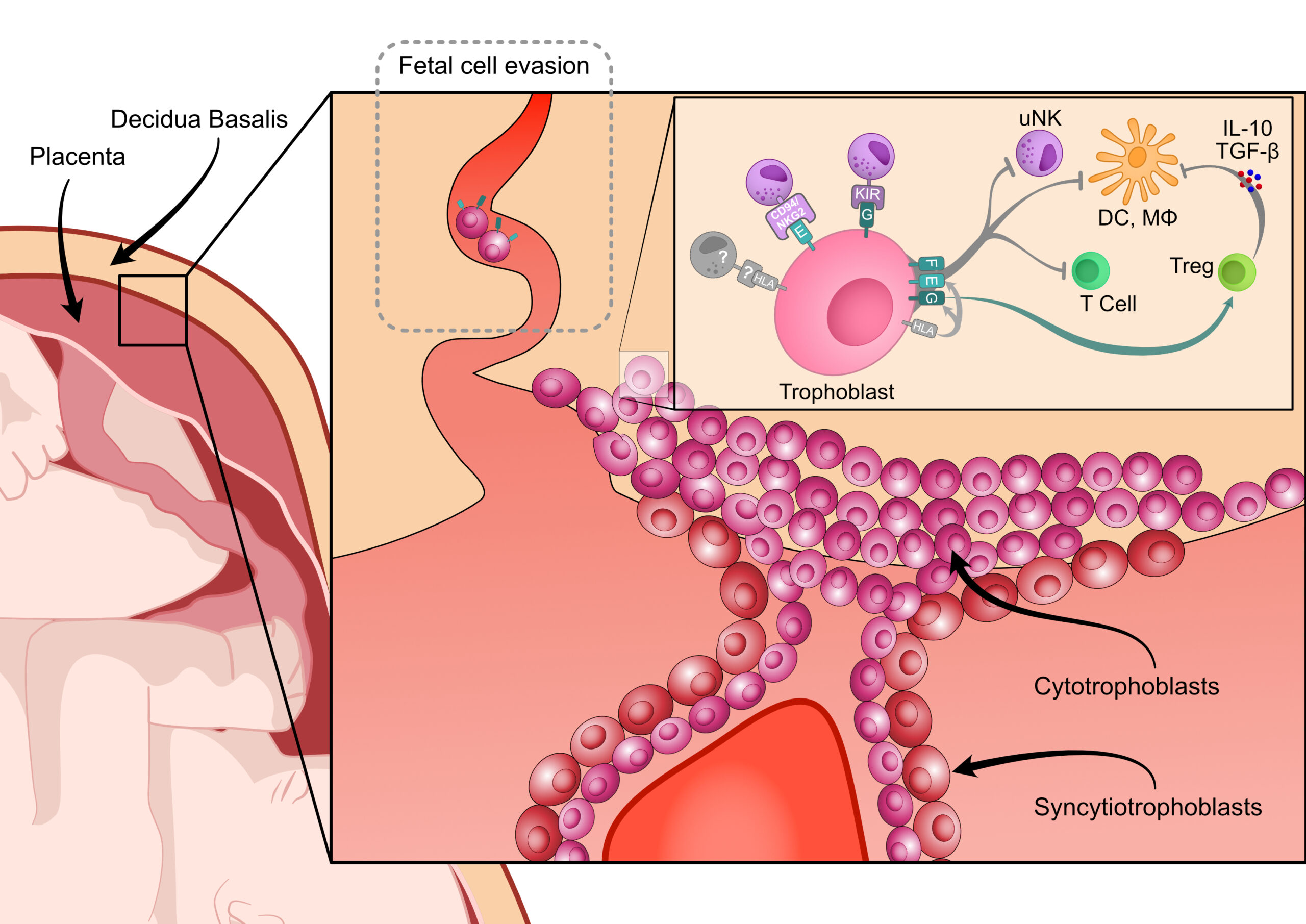
Nonclassical HLA and pseudogenes in maternal–fetal tolerance and cancer

Marie Duhamel, Tristan Cardon, Lydia Ziane-Chaouche, Michel Salzet
Trends in Immunology
https://doi.org/10.1016/j.it.2025.08.006
Abstract
The immunological tolerance protecting the fetus from maternal rejection during pregnancy involves nonclassical human leukocyte antigen (HLA) class I molecules (HLA-G, HLA-E, HLA-F) interacting with maternal immune-inhibitory receptors. Cancers similarly exploit these molecules to evade immune detection and promote tumor progression. Pseudogenes within the major histocompatibility complex may modulate these pathways via noncoding RNA, gene conversion, or protein interactions, although their precise roles remain unclear. Furthermore, fetal–maternal microchimerism potentially reinforces maternal tolerance but could also influence susceptibility to autoimmune disorders or cancer. This review critically evaluates current experimental evidence, identifies knowledge gaps, and proposes therapeutic approaches targeting these pathways in oncology without compromising maternal–fetal tolerance.